Restoring the Sacred

Thursday, August 29, 2013

Words of Relevance: Thomas Babington Macaulay


Thomas Babington Macaulay (25 October 1800 – 28 December 1859), one of the greatest essayists of The Victorian Period, in his essay on Lord Bacon, compared the philosophy of Lord Bacon with that of Plato. What Macaulay said in his comparison of the two should strike a chord with anyone living here today.  See if you can discern the relevance.

Here's the quote:
The aim of the Platonic philosophy was to raise us far above vulgar wants.  The aim of the Baconian philosophy was to supply our vulgar wants.  The former aim was laudable; but the latter was attainable. 

Bookmark and Share

Wednesday, August 28, 2013

Words of Relevance: Fr. Jerzy Popieluszko


Father Jerzy Popieluszko, a Plolish Catholic Priest was murdered by three agents of the Polish Communist Intelligence Agency, on October 18, 1984.  He was declared a martyr and was beatified, on June 6, 2010.  He was murdered because of his strong identification with the Solidarity movement in Poland, and because he spoke out publicly against the tyranny of the Communist regime ruling his country.  He was no shrinking violet trying to go along to get along with evil.

George Weigel in a post today at First Things, tells of a contemporary Via Crucis in which figures from modern Polish Catholic history are “inserted” into the traditional Stations of the Cross. The bronzes themselves are well-done, but what is particularly striking about the Pasierbiec Via Crucis is the idea that animates these sculptures—the idea that we can, and should, imagine ourselves living inside the biblical story. 

At the sixth station there in the village of Pasierbiecin, Krakow, ...Blessed Jerzy Popieluszko, the martyr-priest of Solidarity, relieves Jesus of some of the weight of the Cross while Veronica wipes the Holy Face; the message Father Jerzy preached during martial law in Poland...is inscribed on the cross.

Here's the quote:
“Overcome evil with good”


Bookmark and Share

Sunday, August 25, 2013

Words of Relevance: Henry Kissinger


The quote today is from Henry Kissinger, considered by some to be one of the most erudite, and influential, men of our time.  The quote is being used because of its relevance to the debate on "same sex marriage."  It was used today by Robert Royal, editor-in-chief of The Catholic Thing Blog, to caution those who are ready to surrender on this crucial issue that history does not always turn out the way the "well informed" are sure it will.  So, those inclined to turn their backs on Church teaching, and accept evil because of its inevitability, should harken to the words of this man, who at least two American presidents relied so heavily upon.  The quote by Kissinger (which became an issue in the 1976 presidential campaign), in which he offered perhaps his least enlightened prognostication, is being used here to encourage the faithful who refuse to buckle under to the opinions being expressed in our secular society (even when those opinions are being offered by "experts").

Here's the quote:
“The day of the United States is past and today is the day of the Soviet Union. My job as Secretary of State is to negotiate the most acceptable second-best position available.” 
Ah, yes, BUT, on December 26, 1991, the Soviet Union was relegated to the "ash heap of history," as predicted by President Ronald Reagan, in 1982.

Robert Royal concludes his piece with this:
"The gay surge in the West may seem much less likely to be reversed. There are days we all feel that way. And it may be so. But there’s only one way to find out. And it’s not pre-emptive surrender."

Bookmark and Share

Wednesday, August 21, 2013

Words of Relevance: Malcolm Muggeridge Memories


Malcolm Muggeridge,  the British journalist, author, soldier and spy - and yet another intellectual who "crossed the Tiber" late in life and became a Catholic, was visited at his home two years before he died by author and editor George Marlin, who wrote about that visit today on The Catholic Thing Blog.  Their conversation included Muggeridge's impressions of: Ronald Reagan, Mother Teresa, William F. Buckley Jr., and Archbishop Fulton Sheen.  You can read the whole piece by clicking on the link above.

The conversation turned to social issues, and Muggeridge, never a fan of political correctness, spoke candidly about problems he sees prevalent in our culture (and this was back in 1988).  He would not be happy to witness the further deterioration of things since his death in 1990.

Here's the quote:
“Abortion and the homosexual rights movement are the two bad things in our time,” he said. I described New York City’s moral bankruptcy, and he replied:  “The Devil is a very big and clever person, particularly in New York. And he fools many New Yorkers by convincing them they are very smart.”


Bookmark and Share

Monday, August 19, 2013

Words of Relevance: Pope Francis on "The Theology of Sin"


William Doino, Jr., writing today at First Things, talks about Pope Francis and the Theology of Sin.  He contrasts the views of the Pope with those of the secular world (the Pope's views, of course, are those of the Church), and seems to be addressing his comments to the "I'm OK, you're OK;" "It is what is is;" "We're all going to heaven as long as we love each other" crowd with the teachings of the Church through the centuries.  The concept of "shame" seems nowhere to be found in our secular culture, and that (pardon the pun) is a shame.  Here's Doino:
(Pope) Francis takes if for granted that sex outside of marriage (to cite only one sin) is gravely wrong; the world does not—and increasingly doesn’t even believe in the proper definition of marriage. The Pope maintains the urgency of confessing our sins; the world believes in celebrating and justifying them. The Pope believes it essential to acknowledge and promote a healthy Christian concept of shame; whereas the world mocks the very idea of shame. Perhaps that is why Francis, in his April address, reserved some of his strongest words for the “unashamed...”
Pope Francis, addressing his fellow Jesuits on the Feast of their Founder, Ignatius of Loyola, had much to say about the absence of shame in today's society, and one quote in particular stands out.

Here's the quote:
"I do not know if there is a similar saying in Italian, but in our country [Argentina] those who are never ashamed are called “sin verguenza”: this means “the unashamed,” because they are people who do not have the ability to be ashamed and to be ashamed is a virtue of the humble, of the man and the woman who are humble."

Bookmark and Share

Saturday, August 17, 2013

Words of Relevance: Cicero (On Duties)


Marcus Tullius Cicero (106 B.C. - 43 B.C.), considered perhaps the greatest of Rome's orators, never missed an opportunity to castigate Julius Caesar, for what Cicero considered his unlawful ambitions and his demagoguery. Caesar, you will recall, was assassinated on the Ides of March, 44 B.C.,

Cicero wrote his great essay: De Officiis (On Duties), the last of his dogmatic works, in 44 B.C., the last year of his life.  The essay, which is divided into three books and written in the form of a letter to his son, contains many statements one could easily find relevant to our times.  He clearly had disdain for the "change" to the republic brought about by the reign of Caesar, and was not afraid to trumpet his feelings.  He even made clear what he thought about the successors of Caesar who implemented Caesar's policies after his death.

Here's the quote:
"For my part, when the republic was being run by the men to whom it had entrusted itself, I devoted all my concern and all my thoughts to it.  But then a single man came to dominate everything, there was no longer any room for consultation or for personal authority...I only wish that the republic had remained in its original condition, rather than fall into the hands of men greedy not merely for change, but for revolution."

Bookmark and Share

Friday, August 16, 2013

Words of Relevance: Sean Cardinal O'Malley on Abortion & Euthanasia


Relevance can work in both directions.  Yesterday's post on Hippocrates had relevance to what is happening today in the practice of medicine.  Today's post has relevance not only to the words of Hippocrates from 2500 years ago, but also to the wording of the current poor excuse for the Hippocratic Oath.  

Sean Cardinal O'Malley, Archbishop of Boston, and the most courageous of Catholic Bishops in America in defense of the unborn, spoke at this year's March for Life in Washington, D.C.  He linked the evil of Abortion with the upcoming threat of Euthanasia, already a reality in parts of Europe. 

Here's the quote:
"A society that allows parents to kill their children will allow children to kill their parents."

Here in America we rely (as usual) on one of our trusty euphemisms: we call it Physician Aid in Dying (PAD) or physician assisted suicide, already legal in Oregon, Montana, Washington and Vermont. 

Adjutorium nostrum in nomine Domini. 


Bookmark and Share

Thursday, August 15, 2013

Words of Relevance: Hippocrates & Abortion


Most of us are familiar with something called the Hippocratic Oath, which, unfortunately, is no longer administered in our medical schools.  Hippocrates, considered the father of western medicine, practiced and wrote during the Age of Pericles.  He lived roughly between the years: 460 B.C. and 370 B.C.  The oath attributed to him, which is not long, can be read HERE.  A modern version, HERE, currently in use has glossed over some of the proscriptions in the original and obliterated certain other parts (you can probably guess one of the parts that was obliterated even if you haven't seen the current version).  The conspicuous absence of the proscription against the taking of life could make one think there might just have been some heavy lobbying by the "pro-choice" folks who couldn't bear the language removed from the original.  The quote below is from the original, and is NOT in the current version:
"I will neither give a deadly drug to anybody who asked for it, nor will I make a suggestion to this effect. Similarly I will not give to a woman an abortive remedy. In purity and holiness I will guard my life and my art."

It actually gets worse: language inserted into the current version is a clear start down the path to Euthanasia.  Here's that scary quote:
"Most especially must I tread with care in matters of life and death. If it is given me to save a life, all thanks. But it may also be within my power to take a life; this awesome responsibility must be faced with great humbleness and awareness of my own frailty. Above all, I must not play at God.
"

I will remember that I do not treat a fever chart, a cancerous growth, but a sick human being, whose illness may affect the person's family and economic stability. My responsibility includes these related problems, if I am to care adequately for the sick."

Nice to know they don't want to play God, but that "awesome responsibility" (to take a life) just might make it necessary, especially if the "illness may effect the person's family and economic stability."  Seniors beware!


Bookmark and Share

Wednesday, August 14, 2013

Words of Relevance: Divine Creation and The Virgin Birth

Today's quote comes from Anthony Esolen, writing at The Catholic Thing Blog.  With help from Anne Roche Muggeridge, daughter-in-law of Malcolm Muggeridge, the Intellectual who came to the Catholic faith late in life, he deconstructs the arguments of those who want to play both sides of a question.  For instance, those who can accept that God created the universe, but cannot accept that He could cause a virgin to give birth.  He addresses those players of both sides by saying:
Or are we to believe that the God who created a universe from nothing cannot fructify the ovum in a woman’s womb?  This is another example of the mythologizing of the self-styled demythologizers, the bunko artistry of the debunkers.   
After inserting the knife, he twists it, and,

Here's the quote:
"It’s coherent to believe in both the divine creation of the world and the virgin birth of Jesus.  It’s coherent to believe neither.  But it’s incoherent to believe the first and that the second is impossible." 


Bookmark and Share

Tuesday, August 13, 2013

Words of Relevance: Samuel Whittemore


Today's quote is about, rather than by, this oldest known (but not very well-known) combatant in the American Revolutionary War, Samuel Whittemore.  He was apparently more of a doer than a speaker, as nothing ever said by the man could be found.  His deeds, though, and the deeds of others like him, speak louder than the words of all the politicians that have followed them.  Without their selfless efforts, today's politicians wouldn't have a country to "serve."

Today's quote is from Wikipedia, and chronicles the retreat of British forces after the Battles of Lexington and Concord.  Here's the quote:
Whittemore was in his fields when he spotted an approaching British relief brigade under Earl Percy, sent to assist the retreat. Whittemore loaded his musket and ambushed the British from behind a nearby stone wall, killing one soldier. He then drew his dueling pistols and killed a grenadier and mortally wounded a second. By the time Whittemore had fired his third shot, a British detachment reached his position; Whittemore drew his sword and attacked. He was shot in the face, bayoneted thirteen times, and left for dead in a pool of blood. He was found alive, trying to load his musket to fight again. He was taken to Dr. Cotton Tufts of Medford, who perceived no hope for his survival. However, Whittemore lived another 18 years until dying of natural causes at the age of 98.
H/T: robpmck

Bookmark and Share

Thursday, August 8, 2013

Words of Relevance: Homer


Those of you who have studied some Greek need no introduction to the blind poet of Ancient Greece.  Those of us who were briefly introduced to him in high school, or before if we attended good schools, are at least familiar with his two greatest epic poems: Illiad and Odyssey.

Writing about 800 years before the birth of Christ, Homer obviously spoke for generations to come in both of those works.  One living in the United States today would surely find relevance in much of what is said, for example, in Illiad. The poem covers only the tenth and final year of The Trojan War, but gives the reader a detailed account of that year.  One particular quote should strike us as prescience at the highest level.

Here's the quote:
“Hateful to me as the gates of Hades is that man who hides one thing in his heart and speaks another.” 


Bookmark and Share

Wednesday, August 7, 2013

Words of Relevance: Edmund Burke


Edmund Burke, the irish statesman remembered chiefly for his support of the American Revolution and his clearly stated opposition to the French Revolution, wrote a piece entitled Reflections on the French Revolution in which he laments the loss of civility (to put it mildly) on the part of those responsible for the wanton slaughter.  Reading Burke it is easy to see why he is considered the father of modern Conservatism, and a representative of classical liberalism, which is the same thing.  There are several indications of his strong preference for Conservative principles throughout the piece, but one particularly stood out.

Here's the quote:


"When ancient opinions and rules of life are taken away, the loss, cannot possibly be estimated. From that moment we have no compass to govern us; nor can we know distinctly to what port to steer."


Bookmark and Share

Tuesday, July 30, 2013

Words of Relevance: Winston Churchill, "Painting as a Pastime."


After the debacle known as the Dardanelles Campaign, in 1915, Churchill was forced to resign his post as First Lord of the Admiralty, and was in a bad way.  History has been kinder to him after many years, and much of the blame for that disaster, as it turns out, should more appropriately be shared with Field Marshall Kitchener and others.  In any event, before Churchill recovered and went on to save the world from Adolph Hitler, he needed something in his life to jump start his career and, indeed, his interest in a future.  He turned to something he had never before experienced: painting.  As was his wont, he could not involve himself in any form of endeavor without writing about it.  This endeavor was no different, and so we were blessed with his shortest literary work: Painting as a Pastime.

Here's Churchill in his own words:
When I left the Admiralty at the end of May, 1915, I still remained a member of the Cabinet and of the War Council.  In this position I knew everything and could do nothing.  The change from the intense executive activities of each day's work at the Admiralty to the narrowly measured duties of a counsellor left me gasping...I had great anxiety and no means of relieving it; I had vehement convictions and small power to give effect to them.
Fortunately for all of us, this "Last Lion" found something to bring him back from the abyss; he became a painter, and not just any old painter - he became a great painter whose paintings have been displayed in the finest museums in the world.  He begins his short book about this part of his life by, as usual, giving advice.

Here's the quote:
"Many remedies are suggested for the avoidance of worry and mental overstrain by persons who, over prolonged periods, have to bear exceptional responsibilities and discharge duties upon a very large scale.  Some advise exercise, and others, repose.  Some counsel travel, and others, retreat.  Some praise solitude, and others, gaiety.  No doubt all these may play their part according to the individual temperament.  But the element which is constant and common in all of them is Change."
Of course he was talking about change on a personal level.  He would never have been presumptuous enough to call on the citizens of England to vote for change of his, and their, beloved country.


The Great Hall at Blenheim Palace (birthplace of WSC) by Winston S. Churchill.


Bookmark and Share

Sunday, July 28, 2013

Words of Relevance: Austin Ruse, "Letter from Moscow"


Austin Ruse, he who introduced us to Brendan Kelly a few posts back, may be on to something.  In his latest post on The Catholic Thing, entitled, Letter from Moscow, Ruse states: What I know is a religious revival is going on in Russia. And the Orthodox Church is leading it.  He provides some concrete examples and commentary:
Russian Railways czar Vladimir Yakunin, whom I met with, recently engineered a visit to Russia of the True Cross of St Andrew.   Five-hour lines in the rain awaited anyone wanting to venerate it. Happily, Yakunin arranged for me to cut the line. 
I met also with young tech billionaire Konstantin Malofeev whose office is festooned with religious icons. He is working to bring Russian Orthodox and U.S. Christians closer together. 
Malofeev and many other Russians see themselves as a Christian nation sent to help other Christians around the world. For them, at least, that’s why they support the Assad regime; he’s better for Syria’s Orthodox Christians. 
He wonders if some sort of grand global alliance between the Orthodox and Catholics can be achieved and what effect that might have on the global culture war advanced by the sexual left. I wonder, too. 
The global conversation is religious. Seculars may dominate the West. But beyond, they are not really in the picture, except insofar as they can impose their ideology through international institutions and development assistance (think United Nations).
Our voices could be much more powerful if we make common cause with those who many seem to have a vested interest in silencing.
Ruse goes on to lament the undeniable fact that Russia is a nation more into prayer than our own country, yet it's Russia that is under the United Nations microscope for recently passed laws aimed at stopping the advance of the homosexual agenda.

Here's the quote:
"America is now leading an initiative to spread the homosexual agenda globally. We are appointing openly gay ambassadors among traditional peoples. The Dominicans are up in arms about this. And it’s a U.S. foreign policy priority to advance the gay agenda whenever possible. We hold gay parties at embassies, even in places, like Pakistan, where it offends. 
"But Russia is under the microscope of human rights and homosexual activists for recent laws meant to curb the homosexual advance. The Russian Duma (parliament) almost unanimously passed a law banning homosexual propaganda aimed at school children and public manifestations like parades." 


Bookmark and Share

Friday, July 26, 2013

Words of Relevance: Russian Patriarch Kirill I


That's Russian Patriarch Kirill I, the Primate of the Russian Orthodox Church, and he's no shrinking violet.  He's brought to our attention today in a piece by John B. Manos at The Bellarmine Forum, entitled "Gay Marriage is ‘A Sign of Apocalypse’: Russian Patriarch Kiril Speaks His Mind."   Patriarch Kirill is not one to back away from controversies such as political correctness and hate speech.  He takes them on head first.  You can read the whole piece by clicking Here.  The following is just a bit of Manos:
In America, we are all too familiar with the scene where one person speaks their mind and states an opinion contrary to what others perceive to be the “correct” thing to say. Immediately, that person will be jumped on verbally and accused of being any various number of things, “arrogant,” “intolerant,” or worse, sometimes they accuse the person of hate. Unlike Orwell’s 1984, wherein the State had to bear down on Winston, and unlike Soviet Russia, where there were places where one could speak freely, modern America has perfected the art of turning the general populace into stormtroopers for speech control.
It is ironic, in the greek tragedy sense of that word, that to cite St. Paul’s list of sins or the account in Genesis is dubbed “hate speech.” There is no hate in telling someone 2+2=4, but for someone who needs it to be 5, it is hateful, mean, uncharitable, and the rest. Speaking the truth, and speaking one’s mind is punished, not by the State, but by fellow people. For some subjects, such as sodomy, it is dubbed “hate speech” to speak truthfully of it. Yet, St. Paul says that twisting the truths revealed by God into lies is precisely what causes it!
So, what does this mean to turn God’s truth into a lie, create a society where truth cannot be spoken, and where man is worshipped but not God? According to Patriarch Kiril, it is a sign of the Apocalypse.
As indicated above, Patriarch Kirill is not afraid to speak truth to the nonsense of political correctness and "hate speech."  He could not be more clear in stating his position and the position of the Church.

Here's the quote:
“If people choose this lifestyle, it is their right, but the responsibility of the Church is to say that it is a sin before God”.  (It) is not the fact of the existence of this sin – it has always existed. But we are deeply concerned that for the first time in the history of the human race sin is being justified by law. This opens up the prospect of a dangerous development, which will contribute to the moral degradation of society.”

Bookmark and Share

Thursday, July 25, 2013

Words of Relevance: Peggy Noonan


Peggy Noonan (welcome back, Peggy) wrote a piece that needed to be written the other day in the Wall Street Journal, entitled: "How to Find Grace After Disgrace." Click on the link to read the whole piece.  Noonan uses the compare and contrast method to differentiate between our disgraced public figures and the most famous disgraced London politician of the last century: John Profumo.
  Our homegrown moral degenerates could have learned a lot from Profumo, but they didn't.  Here's some of what Noonan had to say:
It was 50 years ago, the spring and summer of 1963. The prime minister was Harold Macmillan, the last Conservative giant before Margaret Thatcher...
It came out that the secretary of state for war, John Profumo, 48, had become involved with a group of people who gathered at Cliveden, the country estate of the Astor family, about whom controversy had swirled since World War II.
At a pool party hosted by the society doctor, he met a young woman, 19-year-old Christine Keeler, who was either a dancer or a prostitute depending on the day and claimant. They commenced an affair. But Miss Keeler was also, she later said, romantically involved with the Soviet naval attaché assigned to London. Yevgeny Ivanov was there the day Profumo met her. And as all but children would have known, a Soviet military attaché was a Soviet spy.
When Profumo was caught, he panicked—and lied. That’s what did him in. And his lie was emphatic: He’d bring libel charges if the allegations were repeated outside the House (sound familiar yet?).
Profumo—humiliated on every front page as an adulterer, a liar, a man of such poor judgment and irresponsibility that he mindlessly cavorted with enemy spies—was finished. Alistair Horne, in his biography of Macmillan, wrote of Profumo after the scandal as a “wretched” figure, “disgraced and stripped of all public dignities.”
Because Profumo believed in remorse of conscience—because he actually had a conscience—he could absorb what happened and let it change him however it would. In a way what he believed in was reality. He’d done something terrible—to his country, to his friends, to strangers who had to explain the headlines about him to their children.
He never knew political power again. He never asked for it. He did something altogether more confounding.
He did the hardest thing for a political figure. He really went away. He went to a place that helped the poor, a rundown settlement house called Toynbee Hall in the East End of London. There he did social work—actually the scut work of social work, washing dishes and cleaning toilets. He visited prisons for the criminally insane, helped with housing for the poor and worker education.
And it wasn’t for show, wasn’t a step on the way to political redemption. He worked at Toynbee for 40 years...He didn’t give interviews, never wrote a book, didn’t go on TV.
When he died in 2006, at 91, the reliably ironic Daily Telegraph wore its heart on its sleeve. “No one in public life ever did more to atone for his sins; no one behaved with more silent dignity as his name was repeatedly dragged through the mud; and few ended their lives as loved and revered by those who knew him.”  (Just a guess here, but I doubt anyone will ever say that about our three most famous philanderers.)
So what are we saying? You know.
We’re saying the answer to the politician’s question, “What is the optimum moment at which to come back from a big sex scandal, and how do I do it?” is this:
“You are asking the wrong question.”
The right questions would go something like: “What can I do to stop being greedy for power, attention and adulation? How can I come to understand that the question is not the public’s capacity to forgive, but my own capacity to exercise sound judgment and regard for others?
“How can I stop being a manipulator of public emotions and become the kind of person who generates headlines that parents are relieved—grateful—to explain to their children?”
Noonan answers her own question, and
Here’s the quote:
You can do what John Profumo did. You can go away. You can do something good. You can help women instead of degrading them, help your culture and your city instead of degrading them.
You can become a man.
H/T: bmck1

Bookmark and Share

Tuesday, July 23, 2013

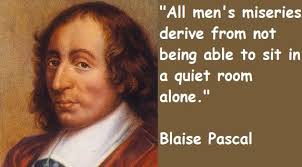
Words of Relevance: Blaise Pascal


Today’s quote is certainly as relevant today (thanks to the current political status quo in Washington) as it was in the 17th century when first penned by French Mathematician Blaise Pascal.


Here’s the quote:

Truth is so obscure in these times, and falsehood so established, that, unless we love the truth, we cannot know it.


Bookmark and Share

Monday, July 22, 2013

Words of Relevance: Daniel P. Moynihan


In a paper entitled: "Defining Deviancy Down,"written for The American Scholar, in 1993,  Daniel Patrick Moynihan, who worked in both Republican and Democrat administrations before serving four terms in the United States Senate, as a Democrat, representing the state of New York, warned of the impending results of our changing culture.  The breakdown of the American family, as he saw it, was the source of most of our cultural ills, and all those ills were exasperated by our willingness to accept new “standards” of behavior.  Sounds a bit like “the new normal,” doesn’t it?


Here’s the quote:

I proffer the thesis that, over the past generation...the amount of deviant behavior in American society has increased beyond the levels the community can"afford to recognize" and that, accordingly, we have been re-defining deviancy so as to exempt much conduct previously stigmatized, and also quietly raising the "normal" level in categories where behavior is now abnormal by any earlier standard. 


Imagine a politician today - especially a Democrat - having the courage to call deviant behavior, deviant.


Bookmark and Share

Friday, July 19, 2013

Words of Relevance: Brendan Kelly


That's Brendan Kelly of Great Falls, Virginia (RIP), meeting with Pope John Paul II, at Castel Gandolfo, in 2001.  Please click on the below link to read his whole story.  If it doesn't move you, you have no soul.

The following is from a piece at The Catholic Thing, by Austin Ruse:
Brendan was born with Down syndrome. At four, doctors diagnosed him with leukemia, a cancer with a high rate of remission – but the treatment is devastating. They turn a fire hose of chemo into your body and then pump you up with massive doses of steroids. This can go on and off for months and with terrible effects.
After his diagnosis, his family applied to the Make-a-Wish Foundation: he wanted to meet the pope. Make-a-Wish didn’t quite believe him since only one other child had ever asked for that. So they met with him privately, tempted him with Disney World, a submarine ride, baseball stars. They wanted to make sure meeting the pope was his wish and not his parents’. Brendan insisted.      
In September 2001, the family gathered with others at Castel Gandolfo waiting to meet John Paul II. When the pope entered, rather than wait his turn, Brendan broke and ran to the pope and stood holding his arm as he greeted all the other pilgrims.  Brendan would not move and the pope loved it. He kept glancing at Brendan and smiling.
As the pope began to leave, indeed when he was out the door and around the corner, Brendan shouted out, “Good-bye Pope.” John Paul the Great returned and the family snapped the picture you see in this column.
Brendan's devotion to Jesus in the Blessed Sacrament was manifest throughout his entire short life.  Here's more from the Ruse piece:
Brendan would not pass a church without blowing a kiss and shouting, “Hi, Jesus.” So normal and natural was this that a priest of Opus Dei still sermonizes about this as an advanced state of the interior life.
So in love was he with the Eucharist that after chemo, when he had to be isolated because his immune system was ravaged, the family would sit outside the church in their massive black Suburban. At Communion, Father Drummond would walk down the aisle, leave the church, and go outside. Brendan’s window went down and the priest would give him the Blessed Sacrament.
Brendan suffered with leukemia nearly his entire life. He got it at 4 and underwent two-and-a-half years of treatment. It returned at age 10 with another two years of treatment. At 14, it came again and he underwent a bone marrow transplant.
He offered all his pain for others. Among his special intentions has been Bella Santorum. Because of her own devastating disability, she should have died within hours of birth.  In intense pain Brendan would shout, “I love you, Bella.”  Bella still lives.
Two weeks before Brendan's death at the age of 16, his body was so ravaged by his chemo treatments that his aunt, who was helping him into bed, could pat him only on his head as every other part of his body was racked with pain.  What he said to his aunt that night could be the most poignant and selfless statement made by a 16 year old in the modern era.

Here's the quote:
 “Aunt Kelly, I am so happy. All you need to be happy is to open your heart to Jesus.”

Brendan Kelly, pray for us.


Bookmark and Share

Thursday, July 18, 2013

Words of Relevance: Leandro Martins


That's Leandro Martins embracing Pope Francis yesterday, after being invited to attend the Pope's private morning Mass at the Vatican.  Martin's story is one that should be published widely, but won't; it's too uplifting.  You can read an account published today on   The Moynihan Letters.  It's not long.  One has to be pretty selective in choosing a favorite quote from such an account, but I have one.

Here's the quote:

"What I found interesting was that after Mass was over the Pope came out and sat by himself. That surprised me. Then I thought I was not going to have a chance to meet him, but Monsignor Alfred brought me outside the chapel and we met and talked. What surprised me was the simplicity of the chapel. It's so simple. He's a simple man and everything is simple there. In these days of ostentation, where having stuff and being someone is more important than things that really matter, he speaks to people like me, he offers a different vision."


Bookmark and Share